
In 2025, JOVS reviewers continue to make outstanding contributions to the peer review process. They demonstrated professional effort and enthusiasm in their reviews and provided comments that genuinely help the authors to enhance their work.
Hereby, we would like to highlight some of our outstanding reviewers, with a brief interview of their thoughts and insights as a reviewer. Allow us to express our heartfelt gratitude for their tremendous effort and valuable contributions to the scientific process.
Flávio Hojaij, University of São Paulo, Brazil
Go Yamashita, Kurashiki Central Hospital, Japan
Kei Naito, Chiba University Hospital, Japan
Flávio Hojaij
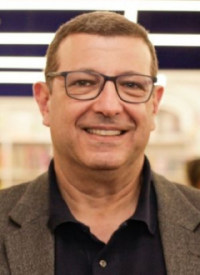
Dr. Flavio Hojaij graduated in 1988 with a medical degree, and completed his residency in general surgery and head and neck surgery in 1993. He obtained a PhD degree in 1998. He received training at the Faculty of Medicine of University of São Paulo (FMUSP) São Paulo, Brazil. He has been working in healthcare and teaching since he got the post-doctorate in 2015. In 2024, he became an associate professor of Surgery at the Faculty of Medicine of University of São Paulo.
In Dr. Hojaij’s opinion, in addition to promoting growth, peer review also cultivates transparency and networking. He does not review subjects on which he has a strong opinion. He often reviews at most 2 papers per week. He tries not to know the origin of the papers to minimize any potential biases during peer review.
(by Lareina Lim, Brad Li)
Go Yamashita

Go Yamashita is an Associate Director at Kurashiki Central Hospital. His clinical and research expertise focuses on cardiac and aortic surgery, with specialized interests in valve-sparing aortic root replacement, other aortic root procedures, coronary artery bypass grafting, and optimizing outcomes in aortic surgery. He is committed to advancing surgical techniques and identifying factors that drive improved patient outcomes in these complex interventions. Recently, he has conducted research on small aortic root management, with findings forthcoming in a peer-reviewed publication. He has also published work on surgically induced new entry tears in aortic dissection, contributing key insights to their prevention. Through these investigations, he aims to refine surgical approaches and deliver impactful knowledge to the cardiovascular surgery community. His ongoing work reflects a dedication to technical excellence and evidence-based practice in the demanding field of aortic and cardiac surgery.
JOVS: Why do we need peer review?
Dr. Yamashita: Science thrives not in isolation, but through collective scrutiny and collaboration. Peer review serves as the backbone of scientific integrity—it is the rigorous, community-driven process that validates research, identifies flaws, and ensures findings are credible and reproducible. It brings diverse perspectives to light, uncovering blind spots that individual researchers might miss and challenging assumptions to strengthen the rigor of work. Beyond selecting publications, peer review fosters trust in scientific progress: it assures clinicians, researchers, and patients that disseminated knowledge is grounded in sound methodology and critical evaluation. In short, peer review is not just a step-in publication—it is the mechanism that sustains the reliability and advancement of science itself.
JOVS: What are the limitations of the existing peer-review system? What can be done to improve it?
Dr. Yamashita: A primary limitation of the current peer-review system is its dependence on voluntary contributions from busy researchers, who often face uncompensated time pressures that compromise review quality, consistency, and turnaround times. Additionally, the lack of formal training for reviewers can lead to inconsistent evaluation standards, while the anonymity of the process may occasionally enable unconstructive feedback. To address these gaps, targeted improvements could include three key steps: first, establishing formal reviewer training programs to standardize evaluation criteria and enhance feedback quality. Second, integrating AI-assisted preliminary screening to filter out manuscripts with fundamental flaws, reducing the administrative burden on reviewers. Third, implementing recognition systems—such as institutional credit, publication of review contributions, or career incentives—to value reviewers’ time and expertise. These changes would shift peer review from a passive "obligation" to a recognized, supported part of scientific collaboration.
JOVS: Would you like to say a few words to encourage other reviewers who have been devoting themselves to advancing scientific progress behind the scene?
Dr. Yamashita: Peer review is work that supports science from behind the scenes, away from the spotlight. It is precisely because of this quiet dedication that we can build new knowledge with confidence and trust. To all my fellow reviewers who share this commitment, I offer my deepest gratitude and respect. Your conscientious efforts illuminate the future of science. Thank you for being the unseen guardians of scientific integrity.
(by Lareina Lim, Brad Li)
Kei Naito
Kei Naito is a surgeon in the Department of Hepatobiliary and Pancreatic Surgery at Chiba University Hospital, Japan, specializing in the surgical treatment and pathological evaluation of hepatobiliary and pancreatic malignancies. His research focuses on the tumor microenvironment of intrahepatic cholangiocarcinoma, with a particular emphasis on how matrix stiffness regulates tumor progression. He is also actively engaged in research projects centered on extracellular matrix remodeling.
Dr. Naito thinks that reviewers must adopt a constructive and impartial approach, paired with the necessary professional expertise to appropriately assess a manuscript’s scientific value. It is equally important to respect the authors’ efforts while providing specific, scientifically and ethically rigorous comments that drive manuscript improvement. In his view, delivering critical yet forward-looking feedback is a core responsibility of a peer reviewer.
Though peer review is an indispensable process that underpins the advancement of science and the entire research community, Dr. Naito reckons that it offers valuable opportunities to discover novel findings, and to learn about cutting-edge research design and scientific writing. Ultimately, these experiences enhance his own clinical practice and research endeavors—this is what motivates him to participate in peer review.
“JOVS focuses on visualized surgery and contributes to communication and education in the surgical field. As both a surgeon and a researcher, I agree with this mission and review for the journal to contribute to the community. Learning from various technical reports is also beneficial for my clinical work,” says Dr. Naito.
(by Lareina Lim, Brad Li)
